
Harmonizing relations with the Sun
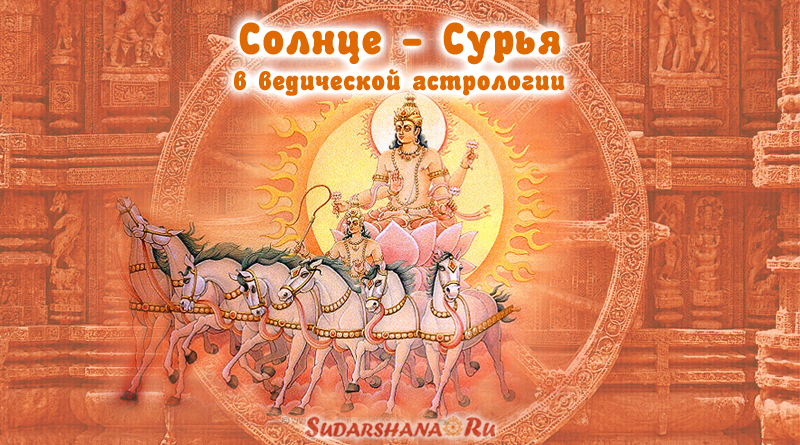
The Sun, being the king of all the planets, personifies the qualities of a ruler who sustains the life of all beings. The «Mahabharata» tells the story of how, when the Pandavas were utterly dejected by their position in exile and were anxious about surviving in the forest jungles, their family priest Dhaumya advised Yudhishthira to turn for help to the god of the Sun by pronouncing the 108 names with which he is glorified:
Dhaumya said: «In ancient times, when all created beings were suffering cruelly from hunger, Savita (the Sun), like a true father, was filled with compassion for them. Setting off to the north, he evaporated the life-giving moisture with his rays and returned again to the south, rising above the Earth. During the solstice the lord of the plant world (the Moon) transformed the solar heat into clouds and poured rain upon the Earth, bringing forth plants. Thus the Sun, under the influence of the Moon, produced various seeds, from which grew divine plants with fruits possessing six tastes. And these became the food of all living beings on Earth. Thanks to solar energy every creature receives its nourishment. Therefore, Yudhishthira, the Sun is the father of all beings, and to him one should turn for help!»
Mahabharata, Vana Parva, chapter 3: «The blessing of the god of the Sun»
The influence of the Sun in a person’s horoscope depends on which combinations of the gunas of nature the native is under:
The influence of the Sun in ignorance is characterised by the following qualities of character and patterns of behaviour: an inability to rise early and to go to bed early, laziness, vanity, sluggishness of mind, enormous egoism, a painful dependence on the opinion of those around one, complete irresponsibility, an inability and unwillingness to keep promises, a desire to take pleasure in watching the sufferings of others, a hostile attitude towards the world, constant grievances against those around one, prolonged anger, enormous arrogance (or, on the contrary, complete lack of self-confidence), an extremely disrespectful attitude towards everyone, especially towards the father and the government, a wholly aimless life, a readiness and a wish to cause others suffering and pain for the sake of attaining a high post or fame.
The Sun in passion: a strong desire to be at the centre of attention, artificial smiles, pride, great impulsiveness, an enormous striving for power, a wish to manipulate others and to exploit them, dependence on the opinion of those around one, great activity in the pursuit of one’s own egoistic goals, the acceptance of responsibility only if it is advantageous and promises to bring fame, self-praise. Respect for the father and for authorities of every kind, and a good attitude towards them, only if there is «something in them to respect» or if they may prove useful. An obsessive wish to save everybody. The person feels happy when he is at the centre of attention, when he attains a prestigious position or fame. What others feel about it does not concern him.
The Sun in goodness: a great sense of responsibility — for himself, for his family line, for his nation and for all living beings; nobility, magnanimity, generosity, bliss in activity, a great sense of self-worth, humanity, purposefulness, resolve, self-discipline, great will-power, the ability to lead while using punishment as little as possible, cheerfulness, innovation, a respectful attitude both towards himself and towards others, an absence of pride and vanity, a loud commanding voice, independence from the opinion of those around him, yet an attentive attitude towards all advice, sincerity, regularly rising early and, accordingly, going to bed early, constant enthusiasm, a great sense of gratitude towards everyone and everything. Such a person easily manages to make others happy, and from this he receives great bliss. An ability to think clearly and to grasp the essence of things quickly.
THE KARAKATVAS OF THE SUN
The indications of a strong Sun:
1. Rhythm 2. The Bhagavad-gita 3. Healing abilities 4. An administrator 5. Ambitions 6. Authority 7. A leading position 8. Bankers 9. A bilious temperament 10. Courage 11. Bones 12. The brain 13. Bronze 14. Brown 15. Scorching the body 16. Holding power 17. A crown 18. Chemists 19. The chest 20. The head 21. Churches, temples 22. Commanding abilities 23. Consciousness 24. Copper25. Coronation chambers 26. Boldness 27. Regal manners 28. Resolve 29. Solidity 30. Heart diseases 31. Diseases of the head 32. Earrings 33. Respect for elders 34. Electricity 35. Energy 36. Honey-coloured eyes 37. A large and round face 38. Faith 39. Fame 40. The father 41. Fruit-bearing trees 42. Magnanimity 43. Religiousness 44. Gold 45. Jewellers 46. A character of goodness 47. Grace 48. Herbivores 49. The heart 50. Heart diseases 51. A rapid heartbeat 52. Hot 53. A pungent taste 54. A house with a thatched roof 55. Indigestion 56. Influence 57. An intelligent person 58. Kind-heartedness 59. A king 60. Lead 61. True love 62. The lungs 63. A man 64. Personal magnetism 65. Minerals 66. Creditors 67. Nobility 68. The nose 69. Optimism 70. Orange 71. An inheritance from the father 72. Outward manifestations of the personality 73. Places of worship 74. Political power 75. Positive 76. Mental development 77. Reliability 78. Self-sufficiency 79. Reputation 80. Respect for elders 81. Strict, unyielding 82. Ruby 83. The Sudarshana Chakra 84. Places of sacrifice 85. Of short stature 86. The soul 87. A square body 88. The stomach 89. Strong bones 90. Success 91. Temples 92. The vital air 93. Yellow 94. Dark red
The indications of a weak Sun:
1. Anger 2. Appendicitis 3. A tendency to argue 4. Arrogance 5. Baldness6. Diseases of the bile 7. Blindness 8. Poor blood circulation 9. Cruel and dangerous inclinations 10. Despotism 11. Dictatorship 12. Difficulties and obstacles 13. Diarrhoea 14. Heart diseases 15. Diseases of the head 16. Diseases of pitta 17. Tyranny 18. Domination over others 19. Extravagance 20. Poor eyesight 21. High fever 22. Fires 23. Fistula 24. Haughtiness 25. A rapid heartbeat 26. Inflexibility 27. Jealousy 28. Irritability29. Over-confidence 30. Public opposition 31. Pomposity 32. The seizure of power 33. Pride 34. Ostentatious 35. Not worthy of trust 36. Needless losses 37. A changeable character 38. Epilepsy

Upayas, or methods of strengthening the beneficent influence of the Sun
(they have particular force when performed on a Sunday):
- Rise before sunrise and worship the Sun with the mantra «Om Namo Surya-Narayanaya namaha»
- Perform the Surya Namaskar sequence
- Proper nutrition, especially grain and pulse crops
- Come to know the influence of time (the Sun is the universal clock), learn to do everything on time
- Strengthen the metabolism and the immune system
- Strengthen the bones and joints
- Watch your posture, train the spine
- Spend more time in the sun (short of sunstroke)
- Go into the mountains
- Care for children, women, the elderly and so on
- Look after your father or help him
- Association with men, especially with superiors and with people in government service
- Association with doctors
- A critical perception of events
- Be more responsible in your affairs, take responsibility for your own life
- Defend and lobby for people’s interests, strive to live not only for yourself but for others (to give life to others is the principle of the Sun)
- Seek respect and recognition in society
- Find something to respect in people
- Feed deer
- Tend fruit trees
- Wear orange or red clothing
- Wear a ruby set in gold on the ring finger
- Travel or walk in an easterly direction
- Visit a temple
- Read the Ramayana and the Rama mantra (Rama is the foremost in the Surya-vamsha, the dynasty of the Sun)
- Worship of God the Father (in the Christian tradition)
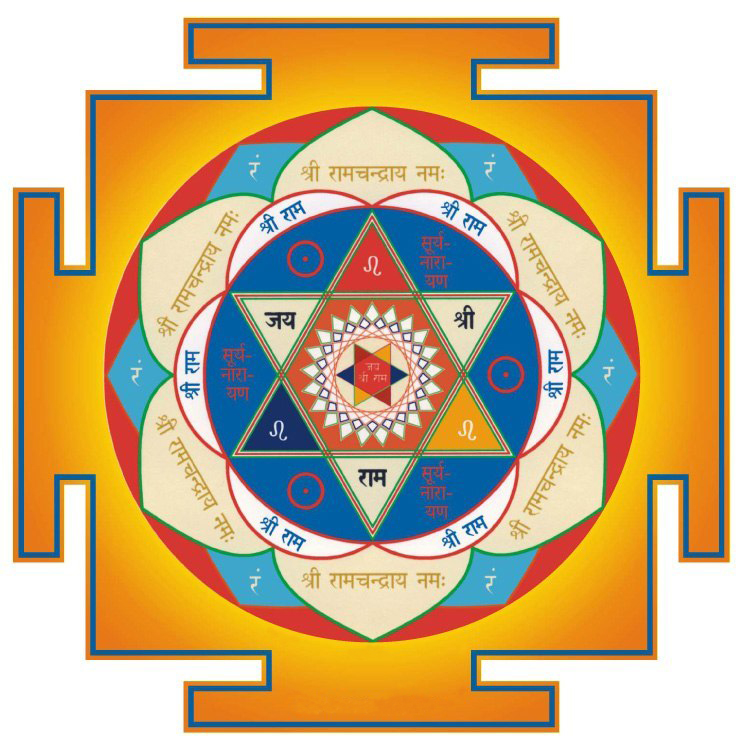
The mantra to the Sun: OM HRAM HRIM HRAUM SAHA SURYAYA NAMAHA
The yantra of the Sun (hung on the eastern side of the house or room):
Source: Sudarshana.Ru