
The Moon (Chandra)
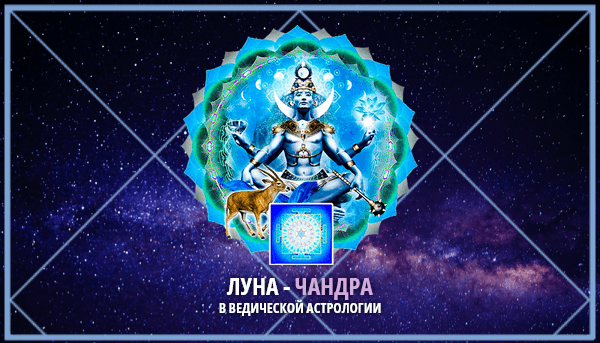
The Moon (Chandra) is the most important factor of the horoscope in Indian astrology. Its significance equals and even exceeds that of the ascendant. If the reason for the Moon’s primary significance is understood, then the essence of the whole system becomes clear, for it rules the sphere of the mind, comfort, and the basic well-being and good fortune of the personality. Unlike Western astrology, where the focus of attention is on personal tendencies and drives, on power, authority and abilities, in Indian astrology what is held to be chief is the well-being a person possesses — that is, comfort, wealth, renown and so on. This is the essence of Indian astrology. Therefore, if the Moon is weakened or afflicted, it will be quite difficult to attain success in life, and the person may never know happiness and well-being.
The Moon rules the mother, women, emotional life and the public. It also governs growth and, probably for this reason, significantly affects health in childhood. People with an afflicted Moon are generally weak and sickly in the first years of their life. The Moon also rules the mind, but not the intellect — rather the sphere of common sense. Memory is a function of the Moon. Probably the most important fact to remember about the Moon is that, more than any other factor of the horoscope with the sole exception of the ascendant, it influences the main direction of one’s life.
Proceeding from the fact that the Moon is such an important factor of the horoscope, the next step after analysing the natal chart is to examine the horoscope in which the 1st house is the one in which the Moon is placed. This chart is called the Chandra lagna (literally, the ascendant of the Moon). The analysis of this chart has no independent significance, but the information obtained from it is kept in mind by Indian astrologers and used in describing the horoscope. The Chandra lagna is not very accurate in predictions, but it lends additional weight and colouring to the actual horoscope.
A great influence is exerted on the Moon by the planets that surround it. It is in the highest degree desirable that the Moon should not be isolated in a horoscope. It is good when planets are either in conjunction with the Moon or placed in the preceding or the following houses, or possibly in both. Of course it is good if these are beneficent planets, but even malefic planets are better than none at all. Otherwise — when the Moon is isolated — this may lead to mental disorder and to an absence of good fortune, renown and a good reputation.
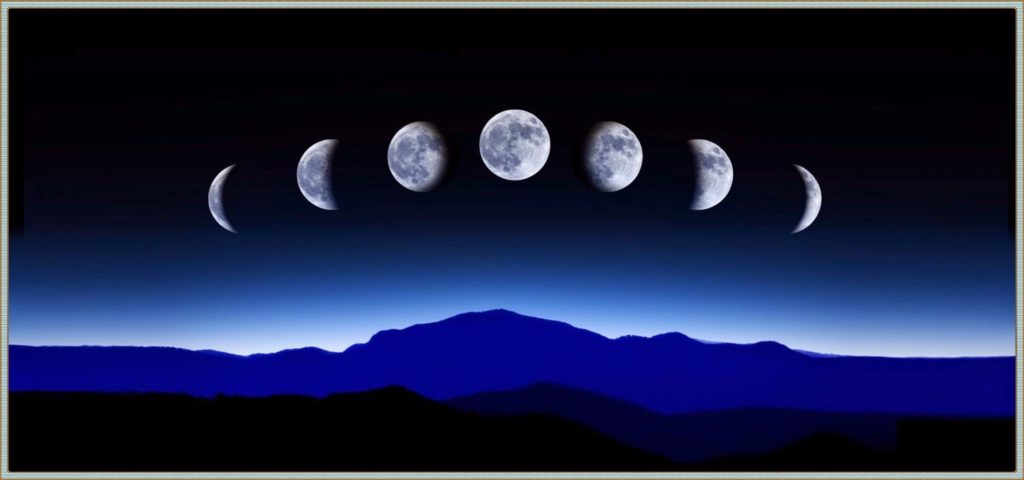
Of decisive significance in Indian astrology is the fact of whether the Moon was waxing or waning at the time of birth, since a waxing Moon brings good and a waning one harm.
It should be made clear, however, that a waxing Moon, or one gaining in brightness, may have moved only a little from the point of the new Moon and therefore still be quite dim. In the same way a waning Moon may have moved only a little from the point of the full Moon and still be very bright. This position must therefore be used with discernment. But two facts should be firmly remembered: the first is that there is a qualitative difference between a waxing and a waning Moon; the second is that a bright Moon has a stronger effect than a dim one. It should also be known that a bright Moon, in the house where it is placed and in its aspects, gives effects as strong as those of Jupiter. Therefore the full Moon, which in Western astrology has an extremely heavy influence (known as the opposition of the Moon to the Sun), is in the Indian system one of the most fortunate and favourable of astrological placements.
Distinguishing a waxing Moon from a waning one in a birth chart is quite easy. If it is moving from the Sun towards the opposition, then it is a waxing Moon, or one gaining in brightness. If, however, it has reached the opposition with the Sun and is moving in the direction of the conjunction, then it is a waning Moon, or one losing brightness.
The Moon is a cold, moist and female planet. Its best placement is in Taurus, where it is exalted. The worst is in Scorpio, where it is in fall. The Moon rules Cancer and gives very good results in that sign. It receives dik-bala, or directional strength, in the 4th house, where it gives excellent results. The Moon’s friends, that is, the planets that welcome it in their signs, are the Sun and Mercury. The remaining planets are neutral towards it. It has no enemies. Another name of the Moon is Soma. Pearl and silver should be worn to strengthen a weak, waning or afflicted Moon.
(James Braha — Ancient Hindu Astrology)
The characteristics of the Moon
- Avatara (Divine incarnation): Lord Krishna
- Mantra: Om Namo Bhagavate Vasudevaya
- The spiritual qualities of the planets (according to K.N. Rao): the capacity for concentration and meditation, soft and tender feelings
- Personification: rules the spirit (is the soul of the Kala-Purusha, or Universal Form)
- Karakatvas: the mother, the heart, the psyche, emotions, character, popularity, changes, travel, journeys abroad, places by water, the sea, pearls, seafood, costly dishes, liquids, bodily fluids, perfumes, milk, salt, medicines, oil products, gardening, hernia, the left eye.
- Chief characteristics: indecision, fertilisation, the ability to bear a child, a connection with water and with the forces of nature; crawling insects.
- Ruler of the graha: Varuna
- Deity: Chandra
- Friends: the Sun, Mercury
- Enemies: none
- Neutral planets: Mars, Jupiter, Venus, Saturn
- Signs ruled: Cancer
- Point of exaltation: 3° of Taurus
- Point of debilitation: 3° of Scorpio
- Mulatrikona: 3-30° of Taurus
- Mean daily angular speed: 13°10’35”
- Number: 2
- Day of the week: Monday
- Direction: north-west
- Symbolises the age: a person of about 70
- The age of the planet’s maturity: 24 years
- The age period under the planet’s influence: 0-4 years
- Chakra: the 4th
- Season: the «rainy season» in India (20.07 — 19.09)
- Best placement (or dik-bala — directional strength): the 4th house
- Distance for assessing the range of journeys: 1 yojana (a relatively short distance)
- Metal: bronze
- Precious stone: pearl
- Geometrical form: a circle
- In the personality: the mind, emotions, feelings
- Subtle energy: pacification
- Significations: the psyche, the heart, attachments, plants.
- Guna: sattva
- Influence: malefic (like Rahu) when the Moon is dim (especially waning); beneficent (like Jupiter) when the Moon is bright (especially a waxing Moon, at its peak at the full Moon); average on the remaining lunar days — for more detail see here
- Energy:
- Element: water
- Varna/caste: vaishya (merchant)
- Gender: female
- Colour: white
- Positive qualities of character: receptivity, sensitivity, imagination, a good memory, an inclination to a healthy way of life
- Negative qualities of character: over-sensitivity, reactivity, inadequacy in communication, an inability to control one’s feelings
- Temperament (on the basis of overall strength): inconstant and changeable
- Method of persuasion: temptation
- Ayurvedic constitution: vata and kapha
- Parts of the body: the heart, the lungs, the mind, the blood, all the fluids in the body, the face; the flesh, the breast, the cheeks, the calves of the legs, the left eye in men and the right eye in women, the stomach, the oesophagus, the womb, the ovaries, the bladder. Kapha and Vata doshas.
- Taste: salty
- Illnesses: diseases of the heart, lungs and breast, tuberculosis, the left eye, asthma, diarrhoea, anaemia, all illnesses due to an imbalance of fluids, vomiting, poisoning, menstrual dysfunction, colds; diseases of the heart and lungs, asthma, problems with the throat, cough, colds, bronchitis, diarrhoea, dysentery, colic, digestive disorders, diabetes, jaundice, appendicitis, diseases of the kidneys and the womb, disorders of the menstrual cycle, venereal diseases, skin diseases, itching, anaemia, apathy, contamination of the blood, abscesses, fever, tumours, tuberculosis, fear of horned animals and of water, dropsy, consumption.
- Outward signs: a phlegmatic constitution, an unhealthy air, rounded forms, a thin and tall appearance; strong and very beautiful limbs, pleasant eyes, wit, sexuality, frequent changes of mood.
- Height: people of short stature
- Peculiarities of birth: back first
- Direction of gaze: a straight gaze
- Clothing: new clothes
- Relatives: the mother
- Position in the government: the queen
- Marriage union: with a person of one’s own circle
- Sphere of predominant influence (dhatu/mula/jiva): mula (the plant world)
- Places of abode: watery places; rivers, seas, aquariums, coasts, docks, wells, houseboats, barges and ships, public places, hotels, motels, inns, breweries, women’s dwellings, hospitals
- Spheres with which the profession is connected: agriculture, art, music, the arts, medicine, psychology, chemistry
- Animals: rodents, reptiles and many creatures such as insects
- Trees and plants: rice and any plants containing a large quantity of oils and sap, various water plants and plants that blossom at night, the palm tree.
- Flowers: the lily, the poppy.
- Foods: rice, melon, coconut, the palm tree, ordinary fruits and vegetables, cucumbers, milk and dairy products, maize, mild-tasting seasonings, plain water, beer, everything that is stewed or steamed, and in general any food that has undergone culinary processing, water, chilled foods, almost all very juicy and soft fruits or vegetables
- Objects of donation: rice, milk, silver, pearls, yoghurt, sugar, flowers and cloth of white colour, sandalwood. To be donated on Monday evening.
- Kinds of activity and professions: a traveller, a travelling salesman, a mechanical engineer, the navy, maritime professions, shipping, water professions, catering, bars, tourism, advertising, journalism, a teacher, care homes, hospitals, the social welfare of women, agriculture, cattle breeding, work with salt, fish, coral, alcohol, glass, mirrors, chemical products and petrol.
The Moon — main characteristics — Vrajendra Kumar:
Additional indications of the Moon:
- the mother
- women
- the mind, common sense, memory
- the people, mass consciousness
- emotions
- milk, grains, liquids
- growth (health in childhood), fertility
- eyesight
- the breast, the brain
- pearls
- metal — silver
- the north-westerly direction
- Monday
- the menstrual cycle
- general well-being (abundance, wealth, fame, popularity)
- beauty, romanticism, receptivity, femininity
- cooks, nurses, nannies, food suppliers
- changeability, capriciousness, inconstancy
The ruler of the nakshatra in which the Moon is placed, and the corresponding problems with health:
The Sun: a stormy temperament;
The Moon: carefree, cheerful, robust health;
Mars: skin diseases, hypermenorrhoea, blood in the urine;
Mercury: worries about health, a very rich imagination;
Jupiter: excellent health;
Venus: venereal diseases, shaky health, a weak immune system;
Saturn: mental disorders, pessimism;
Rahu: phobias, shyness;
Ketu: irritable, aggressive, but timid in the presence of an opponent.
The state of health
a) The Moon controls the flow of vital energy.
b) With a weak Moon this flow becomes intermittent and uneven, which leads to illnesses.
c) With an afflicted Moon there arise anxieties, mental tension, an inferiority complex and also diseases of the lungs.
d) The Moon in excellent condition gives enviable powers of thought.
The Moon in the houses of the horoscope
1st house:
a) the person lacks independence of judgement; inner waverings, extreme subjectivity, an easy disposition, a pleasant personality, an attractive appearance;
b) at a new Moon in the Lagna (when neither the Sun nor the Moon rules the sign of the Ascendant) health suffers;
c) a waxing Moon gives a good build.
2nd house: an attractive face, pleasant manners, strong family ties, magnanimity.
3rd house: influential speech, spoken or written, fond of travel, sparing of words, inquisitive; if the Moon is heavily afflicted — mental disorders.
4th house: material profit from the state, conveniences, popularity with the people.
5th house: a love of pleasures and of speculation, an innate artistry.
6th house: a low level of vital energy, pedantry, an unsuitable placement for health and popularity.
7th house: an early marriage, a beautiful and obedient wife, material well-being; enjoys popularity and arouses admiration in his own circle, sociability, the possession of real estate.
8th house: the Moon here gives material advantage from the partner, but shortens the life of the spouse or the mother.
9th house: journeys abroad, religiousness, mysticism, justice.
10th house: virtuous, an expert in various fields, changes his kinds of activity; travel, a comfortable and long life, prosperity.
11th house: attains success easily, helps others, has a wide circle of acquaintances, female friends, lives in comfort, fortunate.
12th house: deeply rooted phobias, loves to engage in charity and in mysticism, greedy, attains success abroad, a mother with spiritual inclinations.
The Moon in the signs of the Zodiac
Aries: round eyes, an unbending nature, rash decisions and reactions, a passion for travel, independence, arrogance, ambition, quick-wittedness. Such a person cannot bear being hindered. If the Moon is afflicted — recklessness.
Taurus: democratic, inspired by beauty, by a good life and by the fair sex; phlegmatic, indecisive, egocentric, craving pleasures.
Gemini: a sharp and resourceful mind, a seeker of change, an admirer of music and of women, an eloquent orator, a gentle nature, long-lived.
Cancer: an extraordinary strength of emotions and sensitivity, falls under the influence of women, owns much real estate, thrifty, prudent, religious.
Leo: faithful in his attachments, stubborn, brave, egocentric, proud, haughty, irritable, ambitious.
Virgo: almond-shaped eyes, the heart under the control of the mind, a good build and pleasant speech; shy, too anxious, talkative, sociable, keen on women and music.
Libra: loves beauty, elegance, art, justice and honesty; obliging, far-sighted, changeable, full of desires, fault-finding.
Scorpio: a broad chest, strong emotions, extremely sensitive, sentimental, a miser, malicious, unhappy.
Sagittarius: an optimist, childishly naive, honest, respects his elders, religious people and teachers, glad to help others, grateful, somewhat stingy.
Capricorn: good eyesight, a slim waist, restrained, practical, immoral, conservative.
Aquarius: developed intuition and intellect; humane, open, chooses his friends carefully, keeps a friendship for a long time, active, worries about the common good, irritable, energetic, with artistic inclinations.
Pisces: extremely sensitive, clairvoyant, a weakness for alcohol, falls into addictions, a dreamer, cannot come to terms with the reality around him.
Observations regarding the Moon
- A Moon within 72° of the Sun is considered unfavourable, but is freed of its bad qualities if the Sun is weak. The Moon does not lose its brilliance when it is near a weak Sun.
- The Moon possesses maximum strength in the period from Shukla-paksha-ekadashi to Krishna-paksha-panchami (from the 11th day of the waxing Moon to the 5th day of its waning).
- Venus in a trine from the Moon damages the eyesight.
- A person with a full Moon in his chart under an aspect from Jupiter or Venus will rise to royal standing even if born in modest circumstances.
- A person with a Vargottama Moon in his horoscope takes pleasure in life.
- In a man’s chart, when another planet aspects the Moon, the wife will have the following traits:
- the Sun — from a respected family;
- Mercury — sensible, intelligent;
- Venus — cheerful, beautiful;
- Mars — brave, unruly;
- Jupiter — thrifty, with good manners;
- Saturn — serious, withdrawn.
- The ruler of the Moon’s sign in the Navamsha has a certain influence on the person’s character and appearance.
- The placement of the Moon in a navamsha of Mercury endows a person with good manners.
- A person with the Moon in Cancer is a favourite of his friends.
- If the Moon in the chart is aspected by the lord of the 6th, 8th or 12th houses, the person is unable to cope with obstacles.
- The more unfavourable planets influence the Moon, the more restless the person.
- If the Moon is in debilitation but combinations for the cancellation of its fall are present, the person’s character will be restless and cantankerous.
- A weak Moon is an indication of a changeable and opportunistic nature.
- A favourable Moon endows a person with great responsibility and a good imagination, but also with inconstancy.
- When the Moon is placed in the 2nd house or joined with the lord of the 9th house, the person has an indulgent character and broad views.
- A person with the Moon in Capricorn or Aquarius is hardly likely to be distinguished by a democratic outlook.
- A Moon aspected by a malefic promises neither broad views nor free thinking.
- Aspects of the rulers of the 6th, 8th or 12th houses to the Moon tell negatively on the mental abilities.
- A full Moon on the border of two signs does not bring good results.
- The placement of the Moon between Mars and Saturn indicates problems with breathing.
- A weak and afflicted Moon may be the cause of chronic ailments in the person’s mother.
- A debilitated Moon under an aspect from Mars gives diseases of the blood, including leukaemia.
- With a weak Moon in a watery sign in the 8th house there is a risk of drowning. If this same Moon is joined with Ketu, diseases of the rectum may arise — haemorrhoids, fistulas.
- A weakened Moon in the 8th house foretells poor health in childhood.
- If Saturn or Rahu falls in the sign preceding the Moon and no other planet comes between them, the person will attain the highest standing and authority in his field of activity.
- Mars with the Moon in the 6th house gives suicidal inclinations.
- A person with the Moon in the 9th house is devoted to his parents.
- A waning Moon in the constellation of Aries or Scorpio becomes a dangerous unfavourable planet.
- Anapha yoga (the presence of a planet in the 12th house from the Moon) promises good health.
- Sunapha yoga (the presence of a planet in the 2nd house from the Moon) makes it possible to earn a fortune by one’s own labour.
- A person with the Moon in the 1st, 2nd, 10th or 11th house has an aptitude for financial management in the sphere of agriculture, irrigation, water resource management, dairy production and other fields governed by the Moon.
- The Moon in the 2nd house from Saturn indicates the possibility of work abroad and of an occupation in brewing.
The Moon and the other planets
If the Sun is joined with the Moon [in one house of the horoscope], the person will be skilled in work with machinery and in construction; the Moon in conjunction with Mars makes a person a deceiver, a trader in women, wives and drinks, and one who does harm to his own mother; the Moon with Mercury makes a person courteous in speech, skilled in interpretation and translation, well known and popular; the Moon with Jupiter makes a person fortunate in the struggle with enemies, the head of a sect or of a family, capricious and wealthy; the Moon with Venus makes a person skilled in weaving and plaiting; and the Moon with Saturn makes a person a son of a second marriage… In the same way one should obtain the results of a combination of more than two planets. (Varahamihira — «Brihat Jataka», 14.1-2, 14.5)
Commentary: The last sentence implies that accumulations of planets should be interpreted by combining the interpretations of the pairs of planets. For example, in interpreting a conjunction of the Sun, Venus and the Moon one should use the interpretations of the Sun and Venus, of the Sun and the Moon, and of Venus and the Moon. Attention should also be paid to the relative strength of each particular planet.
The Moon and the Sun
• The Sun in Cancer, the Moon in Leo, or a conjunction of the luminaries in these signs, makes a person lean and fragile.
• The Sun and the Moon in a mutual 6/8 position indicate that the person’s mother and father do not maintain relations with one another. If the weaker planet is the Sun, then the fault lies with the father; otherwise — with the mother.
• The Sun and the Moon placed in one sign but in mutual navamshas foretell poverty.
• A person with the Sun and the Moon in the Lagna is marked by inconstancy.
• A conjunction of the luminaries in Leo strengthens the Sun but weakens the Moon.
• A conjunction of the luminaries in Libra weakens the Sun, but the Moon does not lose strength thereby.
• A conjunction of the Moon and the Sun means birth on Amavasya (the new Moon). The Moon’s being within 3 degrees of the Sun deprives a person of vital energy.
• A conjunction of the Sun and the Moon is more favourable for material prosperity than their opposition (the full Moon) or their placement in a kendra from each other.
• The combination Sun + Moon forms the malefic yoga of the new Moon. If Mercury joins them, then the Moon ceases to be unfavourable.
• A person with the Sun and the Moon in the 12th house without any aspects from favourable planets is reputed to be a simpleton.
• Positions of the Moon and the Sun of 2/12 or 6/8 create conflicts in the houses where the luminaries are placed.
• A connection of the Sun and the Moon makes a person henpecked.
The Moon and Mars
Extremely emotional, unpredictable, poor at controlling himself, healthy, excessively active, hot-tempered, wilful, warlike, ambitious, unceremonious; if the conjunction is in the Lagna, then in the dasha of Mars abscesses and bleeding may appear.
The Moon and Mercury
a) An active mind, a highly developed intellect, reasons soberly, is marked by a good memory, witty, expressive, possesses a multitude of outstanding qualities.
b) If the conjunction is afflicted, then the person is over-sensitive, treats those around him with disdain, is marked by eccentric behaviour and loves to gossip. A weak nervous system, especially if the Moon and Mercury are in opposition to each other. The person suffers from various complexes, from suspiciousness, from guilt and from insecurity.
c) This combination in the 3rd, 6th, 8th or 12th house makes a person skilled in poetry, in creative work and in craft, and also promises wealth.
The Moon and Jupiter
Optimism, benevolence, the ability to empathise, broad views, a kind heart, a developed mind, religiousness. If the conjunction is afflicted, the person becomes sluggish, extravagant and too demanding.
The Moon and Venus
Marked by a love of beauty, refinement, coolness, justice and shyness, and by an ability to bargain and to conclude deals; follows fashion, is keen on art and music, is subject to frequent changes of mood. The Moon with Venus in the 7th or 11th house increases interest in the opposite sex. An opposition of the Moon and Venus gives a love marriage (if the 1/7 axis of houses in the Rashi and Navamsha charts is involved), and also forms a Dhana yoga. For those born at night, a conjunction of the Moon and Venus in the 6th or 8th house may cause digestive disorders and problems in the abdominal area.
The Moon and Saturn
a) A bad character, anxiety; cautious, morose, conscientious, disciplined, hard-working, a perfectionist, a pessimist, closed, low self-esteem, a fear of making a mistake.
is marked by eccentric behaviour and loves to gossip. A weak nervous system, especially if the Moon and Mercury are in opposition to each other. The person suffers from various complexes, from suspiciousness, from guilt and from insecurity.
c) This combination in the 3rd, 6th, 8th or 12th house makes a person skilled in poetry, in creative work and in craft, and also promises wealth.
The Moon and Jupiter
Optimism, benevolence, the ability to empathise, broad views, a kind heart, a developed mind, religiousness. If the conjunction is afflicted, the person becomes sluggish, extravagant and too demanding.
The Moon and Venus
Marked by a love of beauty, refinement, coolness, justice and shyness, and by an ability to bargain and to conclude deals; follows fashion, is keen on art and music, is subject to frequent changes of mood. The Moon with Venus in the 7th or 11th house increases interest in the opposite sex. An opposition of the Moon and Venus gives a love marriage (if the 1/7 axis of houses in the Rashi and Navamsha charts is involved), and also forms a Dhana yoga. For those born at night, a conjunction of the Moon and Venus in the 6th or 8th house may cause digestive disorders and problems in the abdominal area.
The Moon and Saturn
a) A bad character, anxiety; cautious, morose, conscientious, disciplined, hard-working, a perfectionist, a pessimist, closed, low self-esteem, a fear of making a mistake.
- If Mercury is joined with a waning Moon, then both planets become unfavourable.
- In the charts of people born by day, the Moon acquires strength in the first seven houses from the Lagna, and the Sun in the houses from the 7th to the 12th. For those born at night the Moon is strong in the 7th—12th houses, while the Sun is strengthened in the first seven houses of the horoscope.
- In a chart drawn up for the purposes of Muhurta, the Moon in the 6th, 8th and 12th houses is considered weak and unfavourable. The exception is the placement of the Moon in the signs of Taurus or Cancer.
- Paksha-bala (strength due to nearness to the full Moon) plays a more important role than Sthana-bala (strength of placement).
The nature of the Moon for the different Ascendants
| Aries | benefic | Leo | malefic | Sagittarius | malefic |
| Taurus | benefic | Virgo | malefic | Capricorn | benefic |
| Gemini | benefic | Libra | benefic | Aquarius | malefic |
| Cancer | benefic | Scorpio | Yoga-karaka | Pisces | benefic |
Upayas — ways of harmonising the energy of the Moon
(they acquire particular force when performed on Mondays — the day of the Moon)
- Look after your mother
- Increased attention and respect towards women — respect them, keep in touch, give presents to your mother or to older women
- Communication with and care for children (especially children under 4)
- Wear white clothing
- Water procedures (shower, bath, swimming pool) 2-3 times a day, or at least once a day (in the morning);
- Drink clean water
- Drink milk
- Eat rice dishes
- Work in the fields (or anything connected with agriculture — watering house plants)
- Feed rabbits and water animals
- Association with doctors
- Wear a pearl (on the little finger or the ring finger)
- Walks in quiet places (forest, park, seashore)
- Drink milk
- Travel or walk in a north-westerly direction
- Spend your evenings quietly
- Lead a measured, calm life
- Practise psychoanalysis, meditation and spiritual practice: strive to feel and understand your emotions (observe your mind and feelings, be able to listen to others, look deep into yourself and try to understand your nature, understand your desires, listen to the inner voice, remember life experience, people’s behaviour, books, dates, names, emotions).
- Worship of Sri Krishna; in the Christian tradition — of the Virgin Mary (the Mother of God — the mother of Jesus Christ)
- Repetition of the mantras to the Moon 108 times (or a number that is a multiple of 108). The mantras: «OM NAMO BHAGAVATE VASUDEVAYA!» «OM CHAM CHANDRAYA NAMAHA!»