
The peculiarities of birth in certain nakshatras
The placement of the Moon in a horoscope is the chief karmic indicator
If the exact coordinate of the Moon is known, additional information can be obtained by carrying out the following simple calculations: divide the janma nakshatra (the one in which the Moon stands) into 12 equal parts of 1°6’40” each and see which interval the Moon falls into. Each part has its own meaning, given below.
- 0° — 1°6’40” — living abroad;
- 1°6’40” — 2°13’20” — high position and power;
- 2°13’20” — 3°20’ — danger, the risk of an accident;
- 3°20’ — 4°26’40” — a regal position;
- 4°26’40” — 5°33’20” — a high position;
- 5°33’20” — 6°40’ — sentimentality, sickliness;
- 6°40’ — 7°46’40” — the loss of one’s position (post);
- 7°46’40”- 8°53’20”- phobias;
- 8°53’20” — 10° — poverty;
- 10°- 11°6’40” — the marriage partner may be younger;
- 11°6’40” — 12°13’20” — comfort and conveniences;
- 12°13’20” — 13°20’ — good and abundant food;
For example, in the horoscope of Alexandra Feodorovna Romanova the Moon is placed at 23° 54’ of Gemini in the nakshatra Punarvasu. Punarvasu begins at 20° of Gemini and continues to 3° 20’ of Cancer; consequently Romanova’s Moon will be in the part whose position speaks of royalty. In our time the presence of the Moon in this interval may be interpreted as the attainment of a high position or birth into a materially secure family.
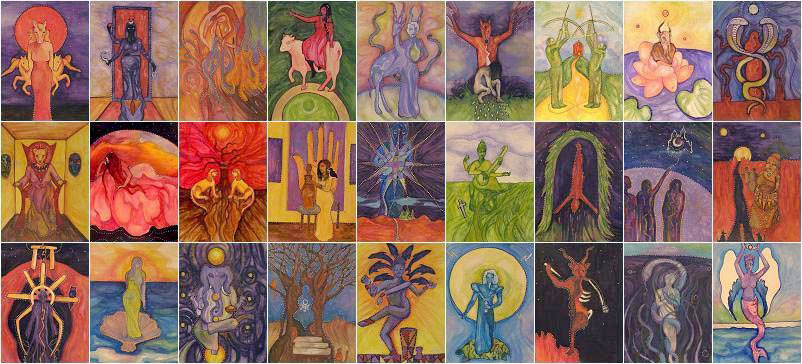
The «Saravali», one of the fundamental texts of jyotisha, written in the 9th century AD, reports that birth in Mula, Ashlesha, Vishakha and Jyeshtha is very favourable for boys: they have a strongly marked individuality, are talented, are endowed with various abilities and possess the qualities of a leader and organiser; they are ambitious and know how to attain the goal they have set. Fame and renown in society come to them, and their names remain in history.
When the lord of the lagna is weak and is placed in the 3rd, 5th or 7th star from the star of birth, the unfavourable factors of the horoscope are strengthened; if the lord of the lagna is strong, then its placement in the above-mentioned nakshatras, on the contrary, protects against negative tendencies and gives good fortune and patronage. For example, in the horoscope of M.A. Bulgakov the Moon is placed in Ashlesha, while the lord of the lagna, Saturn, is in the hostile sign of Leo, in the 8th house, in the nakshatra Purva Phalguni, the third counting from the star of birth. In the horoscope of V.S. Vysotsky the Moon is in Vishakha, while Jupiter, the lord of the lagna, is in the sign of its weakness, Capricorn, in the nakshatra Shravana, the seventh counting from the janma nakshatra, that is, from the nakshatra of the Moon.
This is the astrological explanation of the various hindrances and obstacles in the lives of these talented people. On the contrary, a strong lord of the lagna placed in the 3rd, 5th or 7th nakshatras from the nakshatra of the Moon brings good fortune and the attainment of one’s goals. In the horoscope of A.D. Menshikov the Moon is in Chitra, while the lord of the lagna, Mercury, is in the friendly sign of Libra, in the nakshatra Vishakha, the third counting from the janma nakshatra. In the horoscope of I.V. Stalin the Moon occupies Uttara Bhadrapada, while the lord of the lagna, Mars, is in Aries, in its own sign, in the nakshatra Ashwini, the third counting from the janma nakshatra.
It is considered unfavourable when a child is born into a family with the same nakshatra as one of the parents or a member of the family. This means that that person faces a serious danger to life or is to live through great suffering. The great sage Vasishtha wrote that birth in the father’s or the mother’s nakshatra becomes the cause of the parent’s untimely death.
Other authorities hold that death is possible only in the case where the child’s birth occurs in the very same quarter and the very same nakshatra as that of one of the parents. For example, in the horoscope of Alexandra Feodorovna Romanova, the last Russian empress, the Moon is at 23° 54’ of Gemini in the nakshatra Punarvasu. In accordance with what has been said above, a truly fateful omen was the birth of her daughter Anastasia, in whose horoscope the Moon is placed at 25° 8’ of Gemini, that is, in the same second quarter of Punarvasu.
An unfavourable indication for the father of the owner of the horoscope is held to be birth under the 10th star from the father’s nakshatra. For example, the father has the Moon in Pushya and the child in Anuradha. It is held that the father of a child whose horoscope coincides with his own in the lagnas (rising signs) of the rashi and the navamsha, and also in the janma nakshatra, will die soon after his birth.
The star in which the Moon stands at the time of a person’s birth is counted as the first and is called Janmariksha; the 10th from it is called Karmariksha, the 16th Sanghatika, the 18th Samudaya, the 19th Adhana, the 23rd Vinashika, the 25th Jati, the 26th Desha, the 27th Abhisheka. The placement of malefic planets in these stars is considered an unfavourable indication in a horoscope, pointing to a short life, while the presence of beneficent planets, on the contrary, strengthens the health and brings longevity.
Ganda
A ganda is the transition from one fixed state to another, a so-called «borderline position». For example, the transition of one lunar day into another, the change of the weekday, or the passage of the Moon or the Sun, and also of the other planets, from one nakshatra into another. Birth in a ganda is always marked by karmic problems. A ganda is considered a period of energy crises, a place of the «black holes» of time. The ganda of the Sun will be described in detail in the next chapter, and for now let us turn to a description of birth in the ganda of the Moon, called gandanta tara [in the picture below they are marked with red lines — editor’s note].
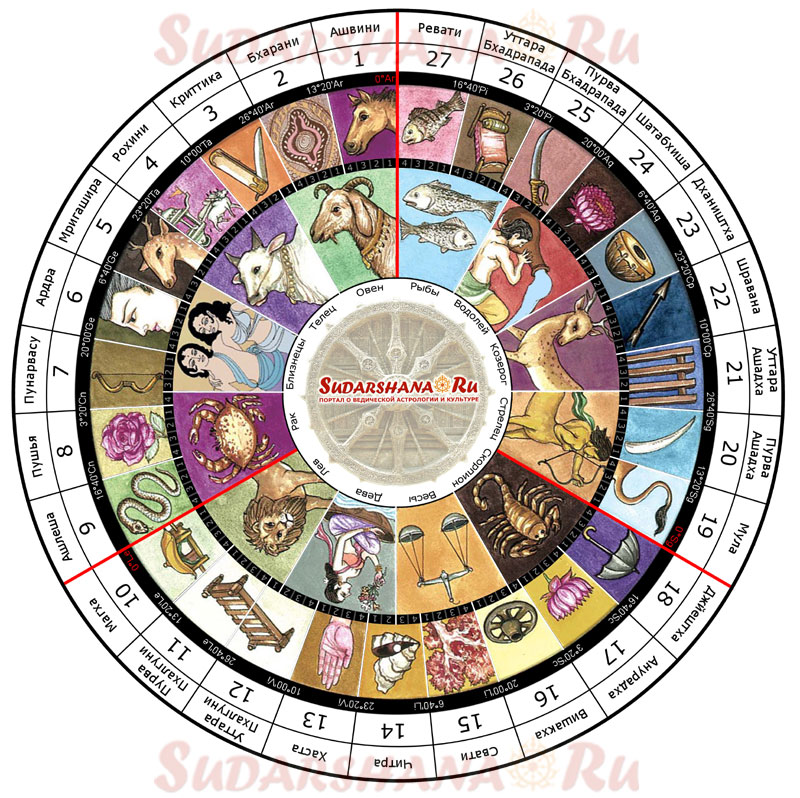
A gandanta tara is formed when the Moon passes from watery signs into fiery ones, from one paryaya (a column of nine nakshatras uniting 4 signs) into another, from nakshatras ruled by Mercury into the nakshatras of Ketu. A gandanta tara is an interval 6° 40’ long, uniting the visha padas (poisonous quarters) of each of the two pairs of nakshatras: Ashlesha and Magha, Jyeshtha and Mula, Revati and Ashwini — that is, the last quarters of Ashlesha, Jyeshtha and Revati and the first quarters of Ashwini, Magha and Mula. The ancient texts on jyotisha say that birth in a gandanta tara causes much evil to living beings. It is said that a person born in the 1st quarter of Mula, Magha or Ashwini will lose his father. The Moon in the last quarter of Revati, Jyeshtha or Ashlesha may bring the loss of the mother, the father or a child. At present the loss of one of the parents may mean the parents’
divorce.
Particularly singled out is the quarter at the junction of Jyeshtha and Mula (the last degree of Jyeshtha and the first 2°20’ of Mula, that is, the interval from the 30th° of Scorpio to 2°20’ of Sagittarius), called Abhukta. According to an age-old belief of the Hindus, a child born in Abhukta Mula carries upon itself the karma of the whole family line. To soften the negative tendencies, the father of the newborn was not to see the child for 8 days. After the performance of religious purificatory rites he could see the child on the 9th day, and then only after first looking at its reflection, and not directly into its face.
This should not be understood as an astrological recommendation in our country, but rather as ethnographic information about the culture of India, where astrologers are qualified in the rites and conduct special purificatory ceremonies — pujas called graha shanti (the blessing of the planets) — which remove the danger for the parents of a person born in Abhukta Mula. The modern Indian astrologer Dr K.N. Rao said that if a person wishes to obtain graha shanti, then he must simply honour his parents and serve them (then the Sun and the Moon will be strengthened in his horoscope), help those around him selflessly, even if some of them are hostile, and always be grateful to whoever has rendered him help. In other words, if a person lives by the Commandments, he receives the patronage of God, expressed through graha shanti (the strengthening of the planets in the horoscope), and his
negative karma is neutralised.
A person born in Abhukta Mula meets with various barriers and obstacles in his life. He has, literally, to fight for his existence. In the same way, birth in the last two degrees of Ashlesha and the first degree of Magha also speaks of an evil fate pursuing the person. The ancient Indian sages also say that «any girl, boy, animal or servant born in Abhukta will be the cause of the ruin or destruction of the family in which they live».
At present the birth of a child in Abhukta Mula may speak of the parents’ divorce. It is also said that birth in Abhukta Mula indicates a danger for the father of the owner of the horoscope. Besides this, the owner of the horoscope himself may die early or suffer a serious illness in childhood; however, if he does not die at an early age, then he will bring glory to his family and will be fortunate and famous; it is also noted that he may come to lead an army.
Among our compatriots, S.P. Korolev and Yu.A. Gagarin had the Moon in Abhukta Mula, and A. Denikin the Sun.
Stellar astrologers hold that a person born in a gandanta tara loses his father if he was born by day, and his mother if he was born by night; and if a person was born in the ganda of day and night, that is, in the morning or evening twilight, he will die himself.
Birth in the gandas of the nakshatras is regarded as a cause of calamities for the parents (at present this is not necessarily the death of the parents; the parents’ divorce is possible); birth in the gandas of the lunar days, that is, at the moment when one lunar day expires and another begins, speaks of misfortunes for elder brothers or sisters; birth in the ganda of the lagna foretells misfortunes for the owner of the horoscope himself. People who were born in the period of all three gandas are considered fateful — they bring ruin to all who are close to them.
The ganda period, that is, the period of risk or the time of working out karmic problems, lasts for people born:
- in the 1st quarter of Ashwini — 16 years;
- in the 1st quarter of Magha — 8 years;
- in the nakshatra Mula — 4 years;
- in the nakshatra Ashlesha — 2 years;
- in the nakshatra Jyeshtha — 1 year;
- in the nakshatra Revati — 1 year.
During this time illnesses of the owner of the horoscope, a death in the family or the parents’ divorce are possible. Besides this, the ganda period is determined not only for the nakshatras of the gandanta tara, but also for the following: Pushya — 3 months, Uttara Phalguni — 2 months, Hasta — 12 years, Chitra — 4 years, Purva Ashadha — 9 months, which are especially dangerous for the father of the owner of the horoscope.
Let us recall that by the term «birth in a nakshatra» is meant first of all the placement of the Moon in that nakshatra at the moment of birth, then the presence of the lagna in that nakshatra, and lastly the placement of the Sun.
Indubala — «Vedic astrology of marriage»