
Wolfgang Amadeus Mozart
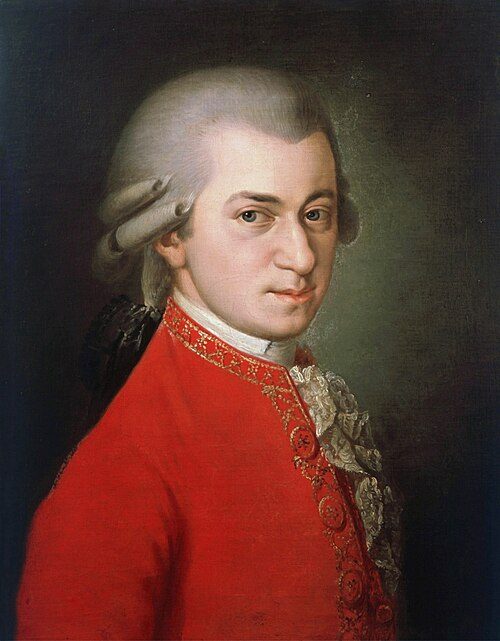
He was composing at five, and from the age of six his father took him round the courts of Europe — Munich, Vienna, Paris, London: the boy was shown off as a wonder and played with the keyboard covered by a cloth. By eighteen he had symphonies and operas behind him; by twenty-five, a post with the Archbishop of Salzburg that he could not bear. In 1781 he walked out and stayed in Vienna with no position at all, one of the first musicians to live on commissions and lessons rather than on a court salary. There he wrote “The Marriage of Figaro”, “Don Giovanni” and “Così fan tutte” to Da Ponte’s librettos, and the last year of his life gave “The Magic Flute”. More than six hundred works in thirty-five years. He died in December 1791 with the Requiem unfinished and was buried in a common grave — the Viennese custom of the day, not the poverty of the legend.
He was born in Salzburg on 27 January 1756 at 20:00 local mean time: Europe had no time zones then, so the hour is reckoned by the longitude of the city. It is known from the letter his father, Leopold Mozart, sent out the day after the birth.